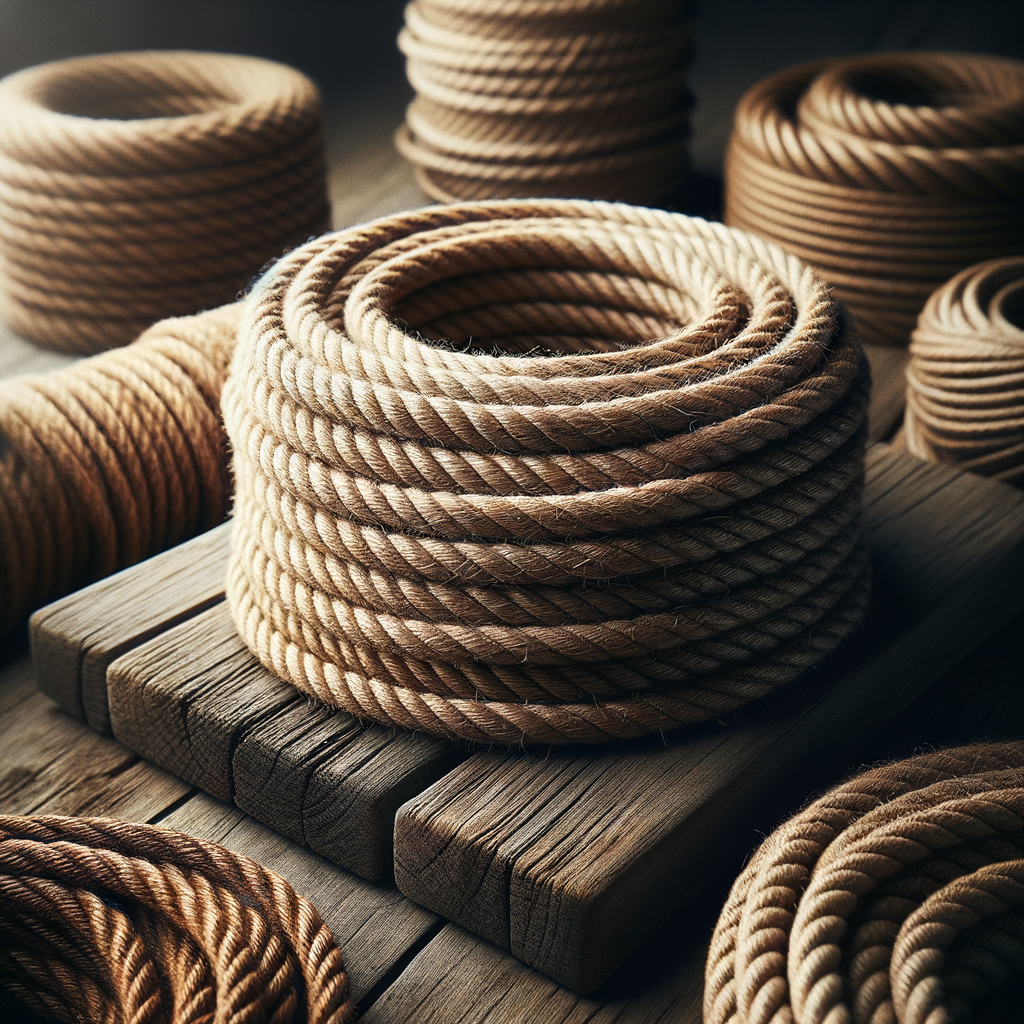

Types of jute rope play an important role across various industries due to their versatility and natural composition. As a widely used natural fiber rope, jute offers an eco-conscious alternative to synthetic materials.
Jute rope is valued for its strength, biodegradability, and ease of use in applications from gardening to packaging. This guide covers different types of jute rope and their practical uses to help you choose the right one for your needs.
Understanding Jute Rope: Characteristics and Benefits
Jute rope’s natural origin and manufacturing process give it unique qualities that suit various tasks. Natural jute fibers exhibit tensile strengths between 250 MPa and 860 MPa, making them suitable for light-to-medium load applications.
What is Jute Rope?
Made from fibers extracted from the jute plant stem, mainly grown in India and Bangladesh, the fibers undergo retting and are spun into yarns. These yarns are then twisted or braided into ropes of different thicknesses and strengths depending on their application.
Jute fibers show densities of 1100–1500 kg/m³ and water absorption between 12% and 105%, influencing rope flexibility and durability.
Key Properties of Jute Rope
Jute ropes offer moderate strength, durability, and eco-friendliness. Their rough texture provides good grip while maintaining flexibility.
- Strength and durability: Suitable for light to medium load tasks.
- Eco-friendliness and biodegradability: Fully natural and decomposes harmlessly.
- Texture and flexibility: Rough surface enhances grip; flexible for handling.
Advantages of Using Jute Rope
Jute ropes promote sustainability and economic value. In concrete composites, adding jute fibers increased tensile strength by up to 35% compared to plain concrete.
- Sustainability: Requires minimal pesticides and fertilizers, making it renewable.
- Cost-effectiveness: Generally affordable compared to synthetics, especially in bulk.
- Resistance: Performs well outdoors in moderate conditions if maintained.
Main Types of Jute Rope and Their Features
Jute rope comes in various styles designed for specific uses. Understanding each type helps in making the right choice. Treated woven jute displayed tensile strengths up to 87 MPa, outperforming untreated fibers in polymer composites.
1. Twisted Jute Rope
The traditional rope is made by twisting several yarn strands together for strength and durability.
- Construction: 3- or 4-ply yarns twisted into a rope with a coarse texture and good grip.
- Sizes: Diameters from 4mm to 16mm; lengths typically 50 to 200 meters.
- Uses: Gardening, tying, bundling, and light outdoor tasks.
- Pros & Cons: Easy to knot and affordable; prone to fraying with limited heavy-load capacity.
2. Braided Jute Rope
Yarns are interwoven, producing a smoother, stronger, and more flexible rope.
- Construction: Braided yarns give enhanced tensile strength and durability.
- Sizes: Diameters from 6mm to 20mm; flexible for delicate uses.
- Uses: Crafts, decoration, and indoor binding where appearance matters.
- Pros & Cons: Less fraying and more aesthetic; higher cost and slightly less grip.
3. Hessian (Sack) Jute Rope
Thicker and coarser, often used with hessian fabric for packaging.
- Features: Highly twisted, robust yarns for durability and abrasion resistance.
- Uses: Packaging, agriculture, securing sacks or bales.
- Pros & Cons: Strong and long-lasting; stiff and less flexible.
4. Hand-Spun (Traditional) Jute Rope
Made by manual spinning, giving a unique rustic texture.
- Production: Handmade with uneven thickness, valued for artisan crafts.
- Uses: Rustic decor, vintage crafts, traditional packaging.
- Pros & Cons: Unique aesthetics; lower strength and higher cost.
5. Colored and Treated Jute Rope
Undergoes dyeing or coating for decorative and protective purposes.
- Treatments: Natural/synthetic dyes and water-resistant or anti-mildew coatings.
- Uses: Crafts, event décor, branded packaging.
- Pros & Cons: Enhanced look and durability; possible environmental concerns with synthetic dyes.
|
Type |
Construction |
Typical Diameter |
Best Uses |
Pros |
Cons |
|
Twisted Jute Rope |
3- or 4-ply twisted yarns |
4mm – 16mm |
Gardening, general tying |
Affordable, easy to knot |
Frays easily, limited load capacity |
|
Braided Jute Rope |
Interwoven braided yarns |
6mm – 20mm |
Crafts, decoration |
Strong, flexible, aesthetic |
Higher cost, less grip |
|
Hessian Jute Rope |
Thick, tightly twisted yarn |
8mm – 25mm |
Packaging, agriculture |
Durable, abrasion-resistant |
Stiff, less flexible |
|
Hand-Spun Jute Rope |
Manual spinning, uneven yarns |
Varies |
Rustic crafts, decor |
Unique, artisanal |
Lower strength, costly |
|
Colored and Treated Jute Rope |
Dyeing and coatings applied |
Varies |
Decor, crafts, commercial |
Attractive, weather-resistant |
Possible environmental impact |
How to Choose the Right Jute Rope for Your Needs?
Choosing the right jute rope involves considering use, environment, and strength requirements. In earth composites, adding 0.5 % jute increased tensile strength up to 200 % over unreinforced samples.
Consider the Application
Determine indoor or outdoor use and load demands.
- Indoor vs outdoor: Outdoor use benefits from thicker, durable ropes like hessian or treated types.
- Load: Twisted ropes suit light loads; braided or hessian work better for heavier loads.
Evaluate Rope Specifications
Diameter and length affect strength and handling.
- Diameter and length: Larger diameters are stronger; length is based on the task.
- Tensile strength and flexibility: Choose ropes with appropriate strength and manageable flexibility.
Eco-Friendly and Budget Considerations
Balancing sustainability with cost helps maximize value.
- Sustainability: Prefer certified, eco-friendly jute ropes.
- Cost vs durability: Treated ropes cost more but last longer and offer better value.
Common Uses of Jute Rope
Jute rope is versatile across many industries and daily activities. Jute fibres show a Weibull modulus of ~4.76 (94 % fit), indicating reliable mechanical property variation in treated fibres.
Gardening and Landscaping
Supports plants, builds trellises, and bundles garden waste with eco-friendly decomposition.
Packaging and Shipping
Secures packages and bales reliably, especially in agriculture and industry.
Crafts and DIY Projects
Braided and colored ropes are popular in macramé, decorative wrapping, and jewelry making.
Home Décor and Furniture
Hand-spun or braided ropes add rustic style and function in furniture and accents.
Agricultural Applications
Used for tying sacks, securing crops, and temporary fencing due to its strength and wear resistance.
Maintaining and Storing Jute Rope
Proper care extends rope durability and safety.
Proper Storage Techniques
Keep ropes dry and ventilated, away from sunlight. Coil ropes neatly to prevent tangling.
Cleaning and Care Tips
Brush off debris regularly and spot clean stains with mild soap; avoid soaking to prevent fiber weakening.
Extending Rope Lifespan
Inspect for damage frequently and apply natural oils to maintain fiber flexibility and reduce brittleness.
Where to Buy Quality Jute Rope
Reliable suppliers provide genuine, high-quality jute ropes suited to your needs.
Reliable Suppliers and Manufacturers
Choose established producers with clear sourcing and certifications. Industry fairs and associations can help find trustworthy sources.
Online Stores and Marketplaces
Major e-commerce sites and specialist retailers offer broad selections and customer reviews.
Tips for Evaluating Product Quality
Look for consistent thickness, tight construction, and clear product details, including tensile strength and treatments.
Conclusion
Types of jute rope, including twisted, braided, hessian, hand-spun, and colored varieties, offer options for various tasks.
Selecting rope based on strength, flexibility, and exposure ensures better performance.
Sustainable jute ropes support environmental goals without sacrificing function.
FAQs
1. What are the main differences between twisted and braided jute rope?
Twisted rope consists of twisted yarns with a rougher texture and moderate strength; braided rope interweaves yarns for a smoother, stronger, and more flexible product, suitable for decorative and heavier uses.
2. Is jute rope suitable for heavy-duty outdoor use?
Jute rope suits light to medium loads outdoors. For heavy-duty tasks, thicker hessian or treated ropes offer better durability and weather resistance.
3. Can jute rope be used for decorative projects?
Yes, braided and colored jute ropes are preferred for crafts, home décor, and event decoration for their look and flexibility.
4. How long does jute rope typically last when used outdoors?
Untreated jute rope outdoors lasts several months to a year, depending on exposure. Treated ropes can last multiple years with care.
5. Are there colored jute ropes available for craft applications?
Yes, jute ropes come in various colors using natural or synthetic dyes, expanding creative and commercial uses.